 CALL US
related posts
Why Is My Furnace Blowing Cold Air?

If your furnace is blowing cold air, it can feel frustrating, especially when you’re expecting steady warmth. The good news is that many of the common causes are easy to spot once you know what to look for. In some cases, the fix is simple and quick. In others, it helps to understand the issue before calling in a technician.
This guide walks through the usual reasons behind cold airflow, how to check a few things on your own, and when it makes sense to get professional help.
Key Takeaways
- A dirty air filter can block airflow and stop warm air from moving through your home.
- Blower motor issues can prevent heated air from circulating properly.
- Blocked vents or ducts can reduce airflow and leave rooms feeling cold.
- Thermostat settings that are off can cause the system to behave incorrectly.
- Ignition problems can stop the furnace from producing heat at all.
Top Reasons Your Furnace Blows Cold Air and How to Fix Them

A furnace that pushes out cold air usually points to a disruption somewhere in the heating process. It does not always mean the system is broken. Sometimes it is a small issue that builds up over time.
One of the most common causes is a dirty air filter. When dust and debris collect in the filter, airflow becomes restricted. The furnace struggles to move air, and that can lead to weak or cold output. Checking the filter is often the fastest place to start.
Another possibility is a problem with the blower motor. This part is responsible for pushing warm air through the ducts. If it is not working as it should, the heat may stay inside the system instead of reaching your rooms.
You should also take a look at your vents and ducts. Blocked vents can stop warm air from circulating. Furniture, dust buildup, or closed vents can all limit airflow. Even a partially blocked vent can make a noticeable difference in how warm a room feels.
The thermostat can also play a role. If the settings are not quite right, the furnace may run without actually heating. It might sound simple, but small setting changes can affect how the system behaves.
There are also broader factors like insulation and air leaks. Gaps around windows or poorly insulated ducts can let heat escape before it reaches your living space. Fixing those areas helps your system hold onto the warmth it produces.
Taking a few minutes to check these areas can often point you in the right direction.
How to Check Your Thermostat Settings

Before diving into deeper troubleshooting, it helps to look at your thermostat settings. This step is simple, but it is often overlooked.
Start by making sure the thermostat is set to “heat.” It sounds obvious, yet it is not unusual for settings to be changed by accident. Once that is confirmed, check the temperature setting. It should be higher than the current room temperature so the system knows to turn on.
If your thermostat includes a calibration feature, it is worth checking. An inaccurate reading can confuse the system. If the thermostat thinks the room is already warm, it will not signal the furnace to produce heat.
Battery-powered thermostats bring another detail into the mix. Weak or dead batteries can cause inconsistent signals. Replacing them is a quick step that can rule out that issue.
If everything looks right and the furnace still blows cold air, the problem may be deeper in the system. At that point, it may help to have a technician take a closer look.
How Clogged Filters Cause Cold Air

A clogged filter does more than reduce airflow. It can affect the entire heating cycle.
When airflow is restricted, the furnace has to work harder to move air through the system. This extra strain can cause the unit to overheat. Many furnaces have safety features that shut the system down when temperatures rise too high. When that happens, the blower may continue to run, but the air coming through will feel cold.
Over time, this pattern can lead to uneven heating. Some rooms may feel warm, while others stay cold. It can also increase wear on the system, which may shorten its lifespan.
Checking your filter regularly makes a big difference. During colder months, it is a good idea to inspect it once a month. If it looks dirty, replace it. A clean filter allows air to move freely, which helps the furnace do its job without added strain.
Keeping up with this small task can prevent a range of heating issues and keep your home more comfortable.
Identifying and Resolving Furnace Ignition Issues
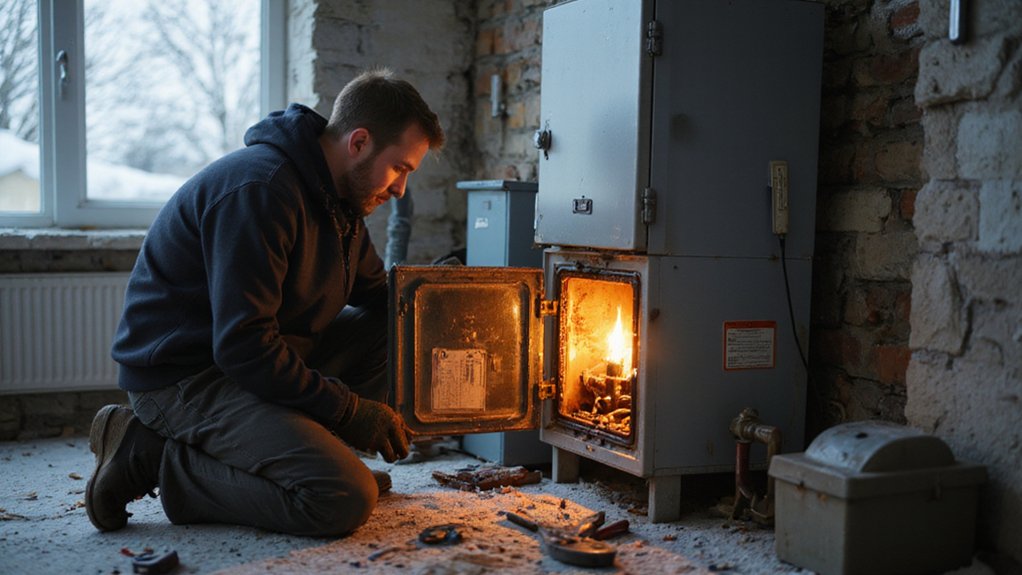
If the filter and thermostat are not the issue, it may be time to check the ignition system.
Older furnaces often rely on a pilot light. If that flame goes out, the furnace cannot produce heat. Relighting it usually involves following the steps outlined by the manufacturer. Safety matters here, so it is best to follow instructions carefully.
Newer systems often use an electronic ignition instead. These systems create a spark to start the heating process. If the ignition fails, the furnace will not heat up even if everything else is working.
You might hear a clicking sound when the system tries to ignite. That can be a sign that the ignitor is attempting to work but not completing the process. In some cases, the part may need replacement.
The gas supply is another piece of the puzzle. If the gas valve is closed or there is an issue with supply, the furnace cannot generate heat. This is not something to guess at. If you suspect a gas issue, it is safer to contact a professional.
Ignition problems are often more technical than filter or thermostat issues. If you are unsure, it is better to have someone trained take a look.
When Should You Call a Pro for Furnace Help?

Some furnace issues are easy to check on your own. Others require tools, training, and experience.
If your furnace is still blowing cold air after checking the thermostat and filter, it may be time to schedule furnace repair and maintenance. The same goes if you notice unusual sounds, strange smells, or the system turning on and off too often.
These signs can point to deeper issues inside the furnace. Ignoring them can lead to bigger repairs later on.
Regular maintenance also plays a role here. If your system has not been inspected in over a year, scheduling a service visit can help catch problems early. A technician can clean components, check connections, and make sure everything is working as it should.
There is also a safety aspect to consider. Furnaces involve gas, electricity, and heat. If something seems off and you are not sure what is causing it, it is safer to bring in someone who knows what to look for.
A trained technician can diagnose the problem and recommend the right fix without guesswork.
Frequently Asked Questions
Can a Power Outage Affect My Furnace's Performance?
Yes, a power outage can interrupt how your furnace operates. When power returns, the system may need a reset. Some furnaces restart automatically, while others may need manual attention.
How Often Should I Schedule Furnace Maintenance?
Once a year is a good routine for most homes. Regular maintenance helps keep the system running smoothly and can prevent unexpected breakdowns during colder months.
What Signs Indicate a Failing Furnace?
Common signs include uneven heating, frequent cycling, or unusual noises. If your furnace is older and these issues appear, it may be time to look into repairs or replacement.
Can Ductwork Issues Cause Cold Air?
Yes, problems in the ductwork can lead to cold air. Leaks or blockages reduce airflow and make it harder for warm air to reach different parts of your home.
Is It Normal for My Furnace to Make Noise?
Some noise is normal. You might hear humming or light rattling during operation. Loud or unusual sounds are worth checking, especially if they appear suddenly.
Conclusion
If your furnace is blowing cold air, it usually points to a clear issue somewhere in the system. Starting with simple checks like the thermostat and air filter can often save time.
Airflow problems, ignition issues, and blocked vents are all common causes. Staying on top of maintenance helps reduce the chances of these problems showing up in the first place.
If the issue does not go away or something feels off, reaching out to a professional is the safest next step. A proper inspection can bring your heating system back to normal and keep your home comfortable.
If your system is outdated, you might also consider heat pump installation and service as an alternative heating option.

other blog posts
Why Does My HVAC Smell Bad? Common Causes & Fixes
The Benefits of Upgrading to an Energy-Efficient HVAC System
Why Is My HVAC Blowing Weak Air?
Ready to Enhance Your Comfort
Contact us today to schedule your service, learn about energy-saving rebates, and feel comfortable in your home all year round.

