
 CALL US

related posts
Should I Choose a Local Heat Pump Installer or a Large HVAC Company?

When you're choosing a heat pump installer, the size of the company isn't the only thing that matters. A local installer may give you more personal attention and a better understanding of the conditions in your area. A large HVAC company may have more technicians, financing choices, equipment options, and warranty support.
The right choice comes down to what matters most for your home. Price, experience, local knowledge, customer service, warranties, and maintenance all deserve a close look before you make a decision.
Key Takeaways
- Local installers may offer more personal service, flexible pricing, and knowledge of local heating and cooling needs.
- Large HVAC companies may have more technicians, equipment choices, financing plans, and warranty options.
- Customer reviews and personal recommendations can help you judge the quality of an installer's work.
- Always check licensing, certifications, insurance, and experience with heat pump installations.
- Compare the full cost of installation, maintenance, warranties, and future repairs instead of focusing only on the initial price.
Key Considerations for Your Heat Pump Installation Needs
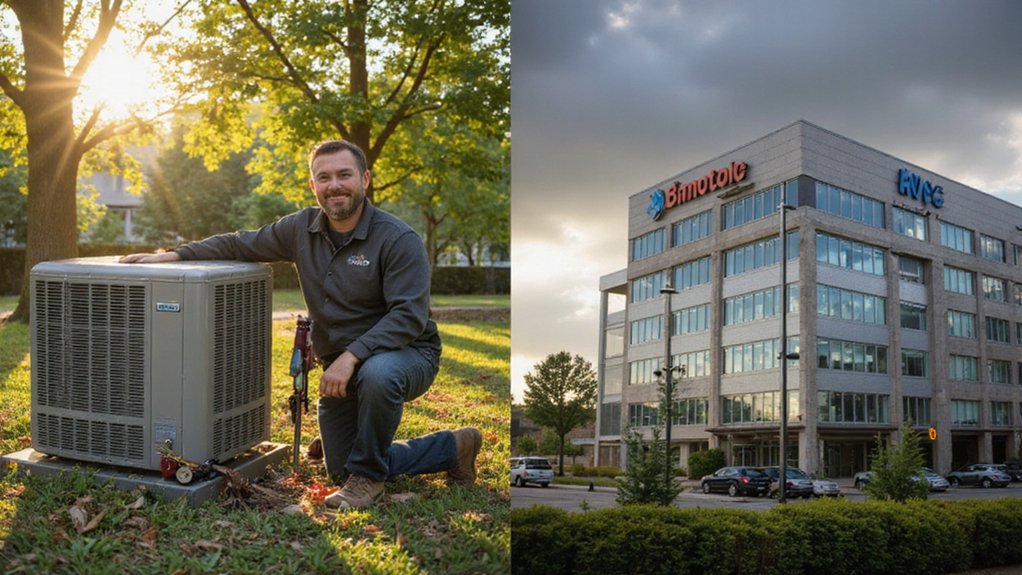
Choosing a heat pump installer is about more than finding the lowest quote. The quality of the installation can affect how well the system heats and cools your home, how much energy it uses, and how often you need repairs.
Start by looking at the installer's experience. Ask how long they've been installing heat pumps and whether they've worked with systems similar to the one you're considering. Experience with heat pumps matters because installation requirements can differ from those of traditional heating and cooling equipment.
The installation schedule is another point to discuss. Ask when the work can begin, how long it should take, and what could cause delays. Having a clear idea of the schedule makes it easier to plan around the work.
Warranty and maintenance should also be part of the conversation. Find out what the installer covers, how long the coverage lasts, and who you'll contact if something goes wrong after installation.
Before signing a contract, check that the company has the required licenses and insurance. These details can protect you if an installation problem or accident occurs.
Advantages of Choosing a Local Heat Pump Installer

A local heat pump installer can be a good fit if you prefer working directly with a smaller team. Local companies often build their business through repeat customers, referrals, and their reputation in the area.
That can mean more direct communication and a service experience that feels less complicated. A local installer may also know the climate, building styles, and heating concerns common in your area.
Price can be another reason homeowners consider local companies. Smaller businesses may have lower overhead and may be more flexible when preparing a quote.
Personalized Service Approach
Working with a local heat pump installer can give you more direct contact with the people handling your project. You may be able to speak with the owner, project manager, or technician when you have questions.
That direct communication can make it easier to discuss your home's heating and cooling needs. Instead of passing questions through several departments, you may have one person or a small team handling your installation.
Local installers may also spend more time looking at the individual characteristics of your home. Things such as insulation, room layout, existing ductwork, and your current heating system can all affect the type of heat pump and installation approach that makes sense.
Community Knowledge and Expertise
Local climate conditions can have a real effect on heat pump performance. An installer who works in your area regularly is likely to be familiar with seasonal temperatures, humidity, common home designs, and local building requirements.
That knowledge can help when choosing equipment and planning the installation. A local installer may also know which products have worked well in similar homes nearby.
A company's reputation within the community can give you another useful reference point. Ask neighbors, friends, or family members whether they've used the installer and how the work went.
Competitive Pricing Options
Local installers may have more flexibility when setting prices. A smaller company may have fewer administrative costs, which can sometimes result in a lower installation quote.
It's still worth comparing several estimates. A lower price doesn't automatically mean you're getting a better deal. Look at what's included in each quote, including equipment, labor, electrical work, permits, disposal, warranties, and follow-up service.
Ask the installer to explain anything that isn't clear. A detailed quote makes it easier to compare local companies with larger HVAC providers.
What Can Large HVAC Companies Offer You?
Large HVAC companies can bring a different set of advantages to a heat pump installation. They may have larger teams, more equipment choices, established manufacturer relationships, and dedicated customer service departments.
For homeowners who want access to a broad range of services, a larger company may be worth considering. Some also provide heating and cooling services after the installation, making it easier to keep all of your HVAC needs with one provider.
Extensive Resources Available
Large HVAC companies often have access to more technicians, equipment, replacement parts, and training resources.
If a problem comes up during installation, having a larger team can sometimes make it easier to find another technician or source a replacement part. Some larger companies also offer service departments that operate beyond standard business hours.
Training can be another advantage. Larger companies may regularly train technicians on different equipment brands and newer heat pump systems.
Still, company size doesn't guarantee better work. It's worth asking who will actually install your system and how much experience that technician has with heat pumps.
Experienced Technicians On Staff
A large HVAC company may have several technicians with different areas of experience. This can be useful if your project involves more than a standard heat pump installation.
For example, your home may need electrical work, duct modifications, or other HVAC changes before the system can be installed. A larger company may have staff who can handle several parts of the project.
Ask about the qualifications of the technician assigned to your home. Find out how often they install heat pumps and whether they have worked with the specific equipment you're purchasing.
Comprehensive Warranty Options
Warranty coverage can vary from one HVAC company to another. Larger companies may offer longer service plans or package labor coverage with equipment warranties.
Don't assume a longer warranty is automatically better. Read the terms carefully. Find out which parts are covered, whether labor is included, how claims are handled, and whether regular maintenance is required.
Manufacturer warranties and installer warranties can also be different. Ask the company to explain both so you know exactly what protection you're receiving.
Local Knowledge and Installation Quality
Local knowledge can be useful when installing a heat pump. Climate, building codes, home construction, and common heating needs vary from one area to another.
An installer who works locally may already understand the conditions that affect heat pump performance in your area. They may also be familiar with local permit requirements and inspection procedures.
Installation quality matters just as much as the equipment itself. Even a good heat pump can perform poorly if it's incorrectly sized, installed, or configured.
Ask how the installer determines the right system size for your home. A proper assessment should take the home's heating and cooling needs into account rather than relying only on its square footage.
Cost Differences: Local vs. Large Companies

Price is one of the biggest factors for most homeowners, but comparing quotes requires more than looking at the final number.
A local installer may offer a lower upfront price, while a larger HVAC company may include additional services, financing, maintenance, or longer labor coverage.
Look closely at what's included. Ask whether the quote covers permits, electrical work, thermostat installation, removal of old equipment, startup testing, and any required modifications.
Financing can also change the total cost. If you're considering a payment plan, compare the interest rate, loan term, fees, and total amount you'll pay over time.
A cheaper installation may make sense if the equipment and service are comparable. A higher quote may also be reasonable if it includes more work or better coverage. The goal is to compare the complete package rather than choosing based on price alone.
The Importance of Customer Reviews and Recommendations

Customer reviews can tell you a lot about what it's like to work with an installer. Look for comments about communication, punctuality, installation quality, cleanup, follow-up service, and how the company handled problems.
Don't focus only on the overall rating. Read several recent reviews and look for repeated patterns.
Personal recommendations can also be useful. Ask people you know who installed a heat pump recently. Find out whether they were happy with the installation and whether the company responded well when questions or problems came up.
It's normal for a company to have a few negative reviews. What matters is the nature of the complaints and how the company responded.
Essential Licensing and Certification for Heat Pump Installers
Before hiring an installer, check the licensing and certification requirements that apply in your area. These requirements can vary by state and local jurisdiction.
Ask the company for its license information and verify it through the appropriate local or state authority when possible. You should also confirm that the company carries the required insurance.
Certifications can provide another indication of a technician's training. If you're considering a specific heat pump brand, ask whether the installer has experience with that manufacturer's equipment.
Most importantly, make sure the company has actual heat pump installation experience. General HVAC experience is useful, but heat pumps have their own installation and setup requirements.
Warranty and Maintenance Options for Heat Pumps

A heat pump can last for many years, so the service you receive after installation matters.
Compare the warranty offered by each installer. Look at the length of coverage, the parts included, labor coverage, and the steps required to make a claim.
Maintenance is another area worth discussing. Ask whether the company offers maintenance plans and what those plans include. Regular inspections can help identify worn components, airflow problems, electrical issues, and other concerns before they become larger repairs.
You should also ask how quickly the company typically responds to service requests. A local installer may offer direct contact with a technician, while a larger company may have a dedicated service department.
Long-Term Benefits of Your Installer Choice

The installer you choose can affect your heat pump for years after the installation is finished.
A properly sized and installed system can provide consistent heating and cooling while helping control energy use. Poor installation, on the other hand, can lead to comfort problems, higher energy bills, and more frequent service calls.
Think about the relationship you'll have with the company after the work is complete. Will you have someone to contact if the system needs attention? Does the company offer maintenance? How does it handle warranty claims?
A local installer may give you more direct service and follow-up. A larger HVAC company may offer a broader service network and more resources. Neither option is automatically right for every home.
The best choice is the company that has the right experience, provides a clear quote, offers suitable warranty coverage, and has a track record you feel comfortable with.
Ask whether the company also provides HVAC repair if your system needs attention later.
Frequently Asked Questions
How Long Will the Installation Process Typically Take?
A heat pump installation often takes one to three days, though the actual time depends on the home and the work required.
Existing ductwork, electrical changes, structural issues, permits, and weather can all affect the schedule. Ask your installer for an estimated timeline before work begins and find out what could cause delays.
What Brands of Heat Pumps Do You Recommend?
Mitsubishi, Daikin, and Trane are among the heat pump brands homeowners may consider. The right choice depends on your home's heating and cooling needs, the system size, local climate, budget, and the installer's experience with the equipment.
Rather than choosing a brand based only on its name, ask your installer why a particular system is suitable for your home.
Are Financing Options Available for Heat Pump Installations?
Many HVAC companies offer financing for heat pump installations. The terms can vary, so compare the interest rate, repayment period, fees, and total cost before choosing a plan.
You can also ask whether rebates, tax credits, or other local programs may apply to your installation.
What Is the Average Lifespan of a Heat Pump?
A heat pump can often last around 15 to 20 years when it's properly installed and maintained.
Regular filter changes, professional inspections, and timely repairs can help keep the system operating well. The actual lifespan will depend on the equipment, installation, climate, usage, and maintenance.
How Do I Know if My Home Needs a Heat Pump?
If your home has high heating and cooling costs, uneven temperatures, or an aging HVAC system, a heat pump may be worth considering.
An HVAC professional can assess your home's insulation, ductwork, existing equipment, and heating and cooling needs. They can then help determine whether a heat pump is a suitable option.
Conclusion
Choosing between a local heat pump installer and a large HVAC company comes down to more than company size.
A local installer may offer personal service, local knowledge, and flexible pricing. A larger company may provide more technicians, financing choices, equipment options, and warranty support.
Get more than one quote and compare what each company includes. Check reviews, verify licenses and insurance, ask about heat pump experience, and read the warranty terms carefully.
The right installer should give you confidence in both the installation and the support you'll receive afterward. Taking time to compare your options can help you find a heat pump installation that fits your home, budget, and long-term needs.

other blog posts
What Are the Warning Signs of a Failing Heating System?
What Should I Check Before Calling an HVAC Technician?
Why Does My HVAC Smell Bad? Common Causes & Fixes
Ready to Enhance Your Comfort
Contact us today to schedule your service, learn about energy-saving rebates, and feel comfortable in your home all year round.

